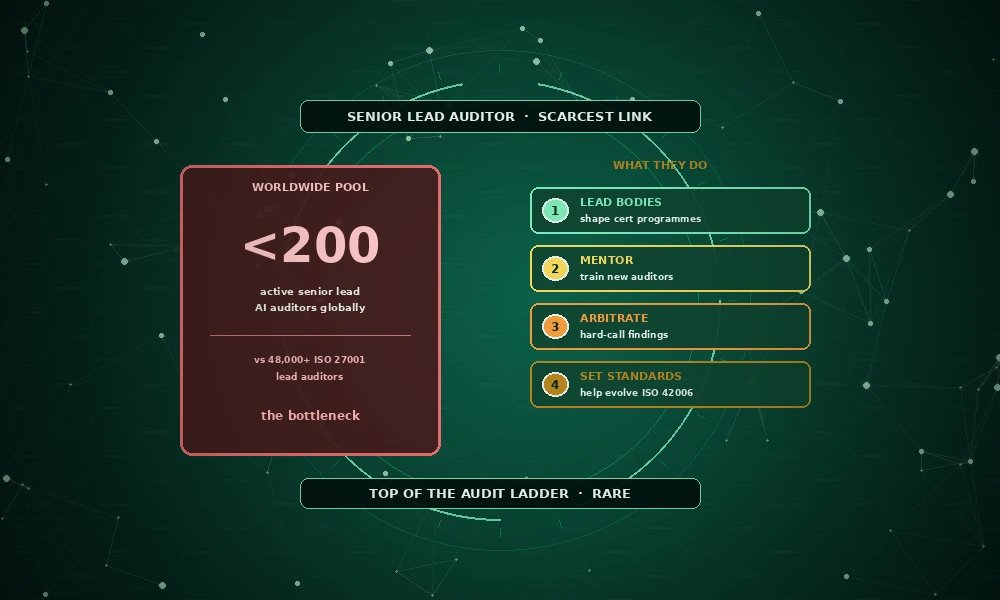
There is a role the entire ISO 42001 certification system is quietly waiting on, and there are almost none of them. It is the senior lead auditor.
The senior lead auditor sits at the top of the audit ladder for ISO/IEC 42001:2023, the AI management system standard, and the grade is defined by one thing above all: extensive, proven audit experience. Not a harder exam, but a longer record of real audits.
That scarcity is not a footnote. Because so few auditors have the experience the grade demands, organizations are waiting months for audits and paying more for them. The senior lead auditor is the bottleneck the market is straining against.
This guide from the AI Governance Certification Institute (AIGCI) explains what the senior audit grade adds, why the whole system depends on it, what the numbers actually show, and how to become one of the few who hold it.
What the senior grade adds for an auditor
As with any senior title, it helps to be precise about what changes. The standard being audited is the same; what differs is the auditor's depth of practice and the scale they can handle.
A senior lead auditor does not simply pass a tougher test. They have led many certification audits across different organizations, and can take charge of enterprise-wide and multinational audit programmes rather than single engagements. The grade recognises range and reliability, not just knowledge.
The experience bar reflects that. Where a Lead Auditor may qualify with a couple of years of experience and a single completed audit, the senior grade typically asks for around five years and several completed audit projects, including a few hundred hours of AI management system auditing specifically. The full ladder and how each grade sits is set out in all certification levels.
Why the whole system is waiting on people like this
This is where the topic stops being abstract, because the shortage of senior auditors is showing up in hard, measurable ways across the certification market.
The accredited-auditor pool is genuinely new. Accreditation bodies only began granting AI management system accreditation in late 2025 and early 2026, so the number of auditors who can sign a fully accredited certificate is still very small, and in some national markets amounts to only a handful of qualified people.
|
The scarcity in numbers: industry analyses of the certification market report accredited certification bodies facing lead times of several months, stretching to six to twelve months where auditor capacity is tightest, and attribute a rise of roughly 20 percent in ISO certification costs in 2026 largely to auditor scarcity and higher day rates. |
Those delays and price rises trace back to a single cause: not enough experienced auditors to meet demand. And demand is climbing, because the EU AI Act is pushing organizations toward independent assessment of their AI, while accredited certification recognised across borders through the international mutual-recognition system is becoming a procurement expectation.
Read together, the picture is stark. The world is asking for more accredited AI audits than the current supply of senior auditors can deliver, which is exactly why the grade is so valuable to hold right now.
Lead Auditor and Senior Lead Auditor, side by side
The two grades separate along experience and scale. Read the scope row closely, because it is where the senior grade earns its name:
|
Attribute |
Lead Auditor |
Senior Lead Auditor |
|---|---|---|
|
What it certifies |
You can lead an AIMS audit |
You have led many, across contexts |
|
Defining basis |
An exam plus baseline audit experience |
Extensive, documented audit experience |
|
Typical experience bar |
A couple of years, one audit |
Around five years, several completed audits |
|
Scope |
Individual certification audits |
Enterprise-wide and multinational audit programmes |
|
Independence |
Impartial on each engagement |
Upholds impartiality and guides other auditors |
|
What it signals |
Capability to audit |
A proven audit track record |
The scope row is the real distinction. A senior lead auditor is trusted not with one audit but with a programme of them, which is why the grade matters most to certification bodies scaling their capacity. The level beneath it is described in the Lead Auditor level guide.
What extensive audit experience looks like
Because the grade is defined by experience, it is worth being concrete about what actually counts. It is measured in audits led, not years elapsed.
-
Many completed certification audits, across different organizations and sectors, not the same audit repeated.
-
Leadership of audit teams and programmes, planning and directing the work rather than only executing an audit plan.
-
Hard nonconformities carried to closure, including the contested findings that test an auditor's nerve and fairness.
-
Impartiality held under pressure, resisting the client who wants a pass and reaching the conclusion the evidence supports.
An auditor with one clean audit is not senior. One who has led many, including the difficult and disputed ones, is exactly what the grade exists to recognise.
Who reaches the senior grade
In practice, senior lead auditors rarely start from nothing. They arrive with an audit background and extend it into AI.
The most common route runs through existing management-system auditing. Experienced lead auditors, who already know how to run an audit, add AI-specific competence and accumulate AIMS audits until they reach the senior threshold. Their audit craft transfers; the AI subject matter and the record of AI audits are what they build.
This is why the grade tends to reward those who commit early to AI auditing from an established base, rather than newcomers who must build both the craft and the record at the same time.
Why senior auditors, not just any auditors, protect the certificate
There is a deeper reason the grade matters, and it goes to the value of certification itself.
A certificate is only as trustworthy as the auditor who signed it. That is why certification auditing runs under strict rules for impartiality, chiefly ISO/IEC 17021-1, which demand that the auditor be independent and objective. A senior lead auditor has proven, over many audits, that they can hold that line when it is uncomfortable.
This is the quiet function of seniority in auditing. The market does not just need more auditors; it needs auditors whose judgement can be relied upon, because a certificate signed by a weak auditor is worth nothing to the buyers who depend on it. Senior lead auditors are the guarantee that the accredited stamp still means something.
What leading an audit programme actually involves
The scope row in the table deserves unpacking, because running a programme is a different job from running an audit.
A senior lead auditor may oversee audits across many sites, business units, or countries for a single client, coordinating other auditors, ensuring their judgement stays consistent, and standing behind the collective conclusion. They plan the programme, not merely the audit, and carry responsibility for its integrity as a whole.
That is why certification bodies prize the grade as they scale. One senior lead auditor can anchor the quality of many audits at once, which is precisely what a fast-growing market needs most.
How to become a Senior Lead Auditor
Since you cannot shortcut audit experience, the route is a deliberate progression rather than a study plan.
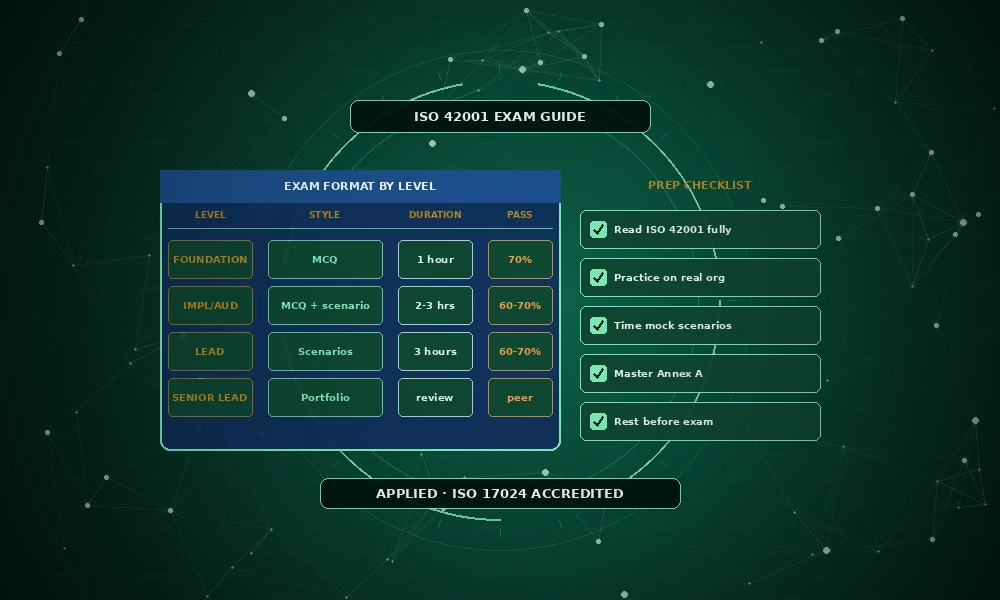
You earn the Lead Auditor credential first, then lead real certification audits across varied organizations, keeping careful records of your projects and hours. When your experience meets the senior threshold, you apply for the grade, often completing an applied assessment that tests audit judgement rather than recall. The thresholds for each grade are set out among all certification levels, so it is worth checking them early and planning toward them.
The most useful way to think about it is that every audit you lead is a step toward the senior grade. You do not book seniority; you accumulate it, one credible audit at a time.
The opportunity hidden in the shortage
The scarcity that frustrates organizations is an opening for auditors, and a rare one.
Because the accredited pool is so small and demand is rising faster than it can grow, an auditor who reaches the senior grade in the next few years steps into a market with far more work than people to do it. Few career moments offer that kind of imbalance in your favour.
The catch is the same as it always is with experience: it cannot be rushed. The auditors who will command the senior grade tomorrow are the ones leading audits today, which is why the moment to start building that record is now, while the shortage is at its widest.
The bottom line
The ISO 42001 Senior Lead Auditor is the top of the audit ladder and, right now, the scarcest and most pivotal role in AI assurance. Its currency is extensive, proven audit experience, and no exam can substitute for it.
With organizations waiting months for accredited audits and costs rising on the back of the shortage, the value of proven senior auditors has rarely been higher. Earn the Lead Auditor credential, lead the audits that build your record, and grow into the grade the whole system is waiting for. The auditors who do will not have to chase the work; the work, held up today for want of them, will be waiting the moment they are ready.
Frequently asked questions
What is an ISO 42001 Senior Lead Auditor?
It is the top grade of the auditor credential, awarded to professionals with extensive, documented experience leading AI management system audits. It certifies a proven track record and the ability to run enterprise-wide audit programmes, rather than a harder body of knowledge, so it is earned through practice over years.
How is it different from a Lead Auditor?
A Lead Auditor can lead an AIMS audit; a Senior Lead Auditor has led many and can take charge of large, multinational audit programmes. The defining difference is extensive audit experience, typically several more years and several completed audit projects, sometimes with an applied assessment at the senior level.
Why is there a shortage of ISO 42001 auditors?
Because the field is very young, so few auditors yet have the experience the senior grade requires. The accredited-auditor pool has only recently begun to form, and industry analyses report certification lead times of several months, both traced back to this scarcity of qualified people.
Can I take the Senior Lead Auditor exam without the experience?
No. Experience is the point of the grade, so it cannot be substituted with study. You earn the Lead Auditor credential first, then accumulate the required audit projects and hours before the senior grade is awarded, whatever assessment a scheme uses.
Is it worth becoming a Senior Lead Auditor now?
For committed auditors, the timing is unusually favourable. Demand for accredited AI audits is rising faster than the supply of qualified senior auditors, so reaching the grade places you in a market with more work than people. The only constraint is that the experience takes real time to build.
Start building the audit record that earns it
The senior grade begins with the Lead Auditor credential and the real audits that follow. AIGCI's Lead Auditor certification is built around auditing actual AI management systems, which is exactly the experience the senior grade later recognises. Explore every option among the ISO 42001 courses, and to learn how the institute designs its programmes, read more about the institute.