An accredited ISO 42001 certificate is valid for three years, not indefinitely, and it stays valid only if the organization passes annual surveillance audits along the way. That three-year cycle is set by the international rules that govern certification bodies, ISO/IEC 17021-1, the same rules behind ISO 27001 and ISO 9001 certificates. So certification is not a one-time badge. It is a commitment the certification body keeps checking. The AI Governance Certification Institute (AIGCI) sees the same confusion often, so this guide separates the two things people mean by validity: how long an organization's certificate lasts, and how an individual keeps a professional certification current.
An ISO 42001 certificate is valid for a three-year cycle, subject to annual surveillance audits and a full recertification audit before it expires, while professional certifications are maintained separately through continuing professional development.
Key facts at a glance
|
Question |
Short answer |
|---|---|
|
How long is an ISO 42001 certificate valid? |
Three years from the date of certification |
|
What keeps it valid? |
Passing annual surveillance audits during the cycle |
|
What happens at year three? |
A full recertification audit renews it for another three years |
|
Which rules set this? |
ISO/IEC 17021-1, the standard for certification bodies |
|
Is professional certification the same? |
No. Individual certifications are maintained through CPD and renewal |
|
Does an expired certificate still count? |
No. Recognition lapses when a certificate expires |
How long an ISO 42001 certificate is valid
For an organization, an accredited ISO 42001 certificate lasts three years. That period is not set by ISO 42001 itself but by ISO/IEC 17021-1, the conformity-assessment standard that every accredited certification body must follow, and which accreditation bodies such as ANAB enforce. The three-year window is the outer limit. The certificate can be suspended or withdrawn earlier if the management system stops meeting the standard, which is precisely what the audits during the cycle are there to catch.
The three-year certification cycle
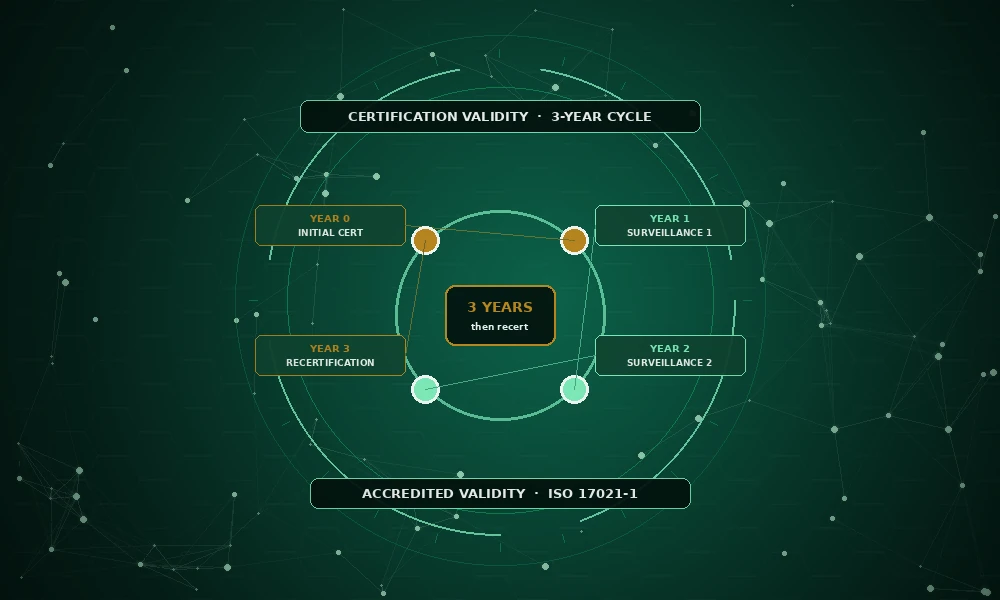
The cycle has a predictable rhythm. It begins with a two-stage initial audit, continues with lighter surveillance audits each year, and ends with a full recertification audit before the certificate expires.
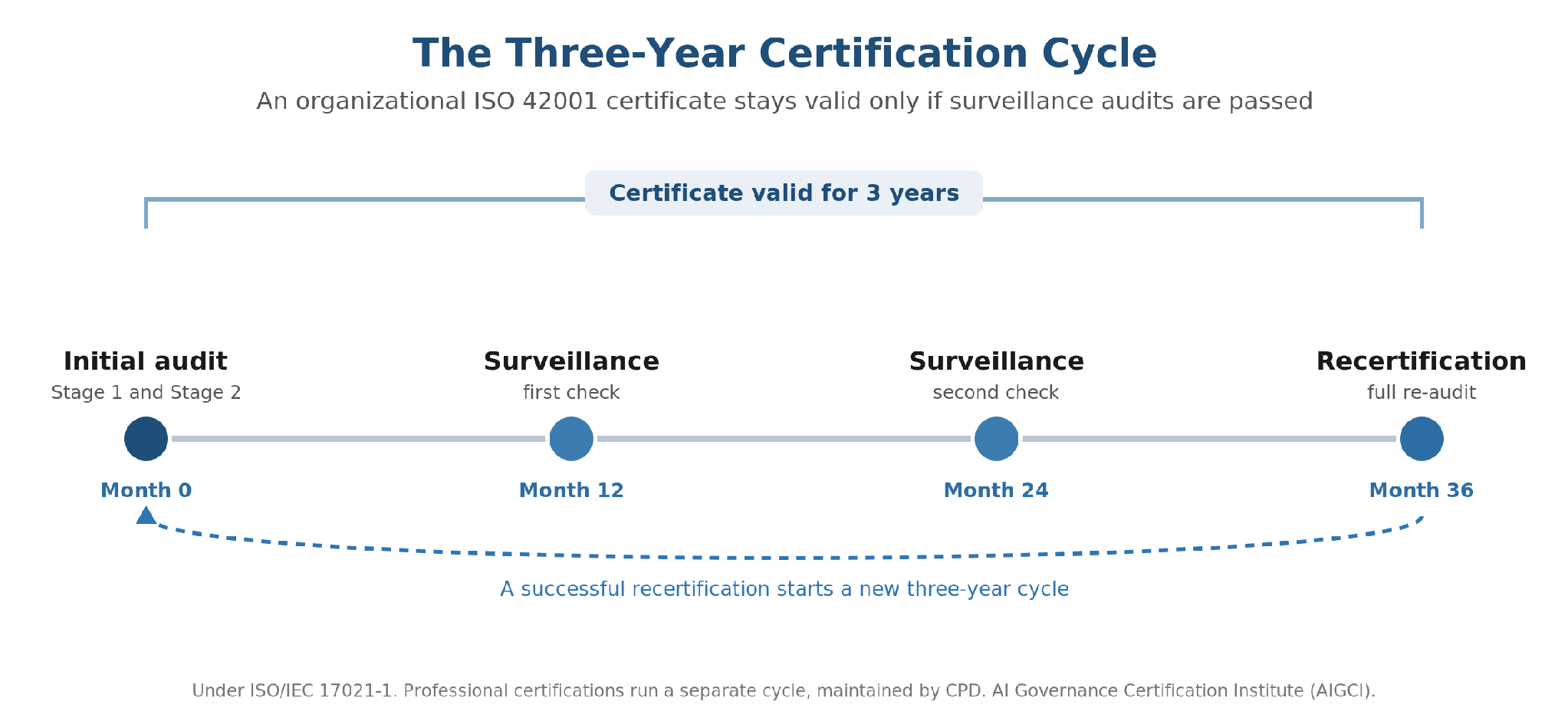
Figure 1. The three-year ISO 42001 certification cycle, from initial audit through surveillance to recertification.
The surveillance audits are not full reassessments. They are focused reviews, typically at twelve-month intervals, that confirm the AI management system is still operating, with attention to the operational clauses and a sample of the Annex A controls. The recertification audit at the end is broader, confirming the whole system still conforms before a new three-year certificate is issued. This structure comes from the international framework for accredited certification, which the IAF mutual-recognition arrangement underpins, and it is why a certificate carries a clear issue date and expiry date.
What keeps a certificate valid, and what voids it
Staying valid comes down to two things: continuing to run the management system as certified, and passing each surveillance audit. A minor issue, called a nonconformity, usually just needs a corrective action. A serious or unresolved one can lead to suspension, and if it is not fixed, withdrawal of the certificate. Major changes to the organization or the scope of its AI systems can also trigger a review. In short, validity is earned continuously, not banked once.
Professional certification validity is different
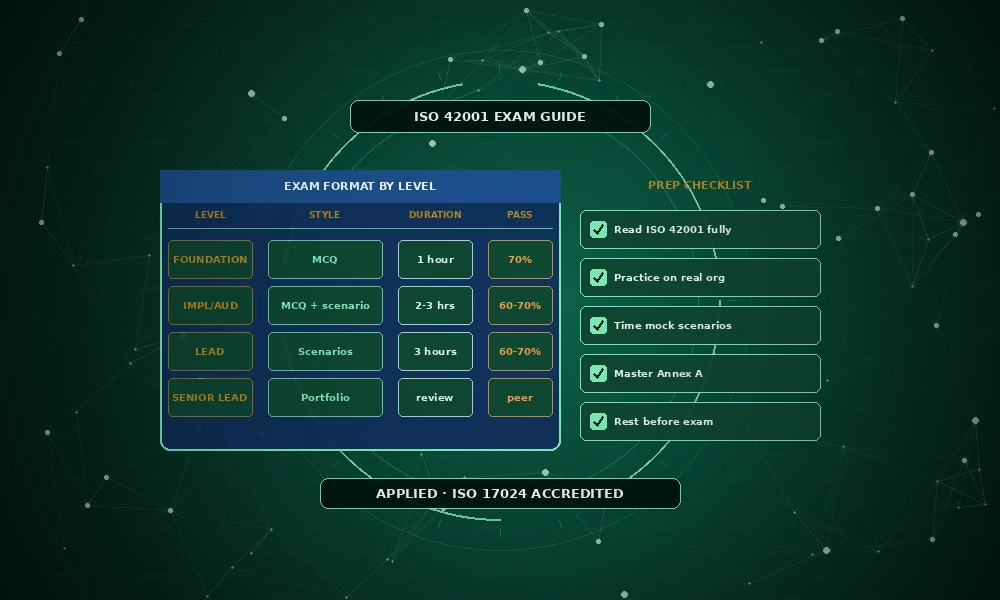
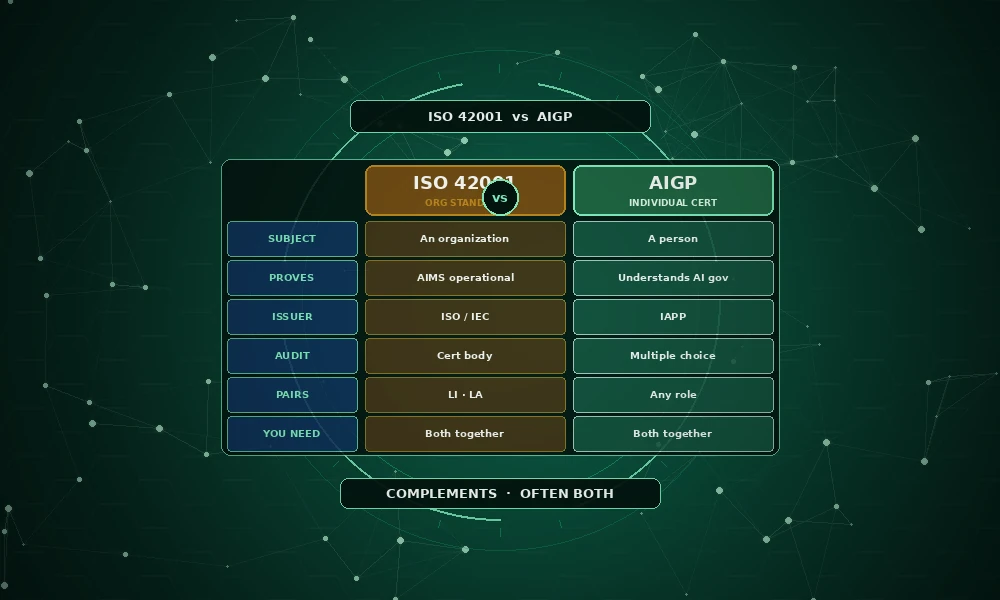
It is easy to confuse the two, so it is worth being precise. The three-year cycle above applies to an organization's certificate. A professional certification, the credential an individual earns as a Foundation, Lead Implementer, or Lead Auditor, is governed instead by ISO/IEC 17024, the standard for certifying persons. These credentials are typically valid for around three years and are kept current through continuing professional development, sometimes with a renewal or maintenance step, rather than through surveillance audits. The exact requirements depend on the body that issued the certification, so confirm the renewal terms with your provider.
Why validity matters for recognition and verification
Validity is the thread that ties trust together. A certificate only earns whether it is recognised while it is current, because an expired certificate no longer proves anything about today's management system. That is also why anyone checking a certificate should confirm its dates, which our guide on how to verify it walks through. Put simply, an ISO 42001 certificate is valid for three years, it must be maintained through annual surveillance and renewed by recertification, and professional certifications follow their own CPD-based cycle. Keep those distinctions straight and the whole system makes sense.
Frequently asked questions
How long does ISO 42001 certification last?
An organization's ISO 42001 certificate is valid for three years, provided it passes the surveillance audits held during that period. A recertification audit then renews it for another three years.
What are surveillance audits?
They are focused annual checks, lighter than the initial audit, that confirm the AI management system is still operating effectively between full assessments. Failing them can put the certificate at risk.
Does an ISO 42001 certificate ever expire?
Yes. It expires at the end of its three-year cycle unless a recertification audit is completed. It can also be suspended or withdrawn earlier if serious nonconformities are not resolved.
How is a professional ISO 42001 certification kept valid?
Individual certifications are usually valid for around three years and maintained through continuing professional development, and sometimes a renewal step, rather than through surveillance audits. Requirements vary by issuing body.
What happens if a certificate lapses?
A lapsed certificate loses its recognition and can no longer be relied on as proof of conformity. The organization would need to be certified again to restore it.
Build certification that lasts
Certificates that stay valid are built on a management system that genuinely runs, and on people who know how to keep it running. AIGCI's ISO 42001 certification training prepares practitioners to implement, maintain, and audit an AI management system through the full cycle, not just to pass a first audit. To learn how the institute structures its programme, read more about the institute.